
Could 3D Prints Be the Collectibles of the Future?

The value we attribute to objects that have stood the test of time and carry the production culture of the past into the present is being reshaped with the evolution of production technologies. Collecting culture, traditionally associated with craftsmanship and rarity, is gaining a whole new dimension in the age of digital design and three-dimensional production. For an object to be considered "antique" or "collectible," it doesn't just need to have been produced in the past; how well it reflects the spirit of its era, technological milestones, and artistic vision is equally critical.
The term antique is generally used for rare objects that are over 100 years old and reflect the aesthetic, sociological, or technological spirit of their time. A collectible, on the other hand, is an object that, regardless of age, is in demand due to its designer, innovative production technique, material quality, or its place in popular culture, and which possesses rarity and a story behind it.
In this century, the rapid development of digital production tools is challenging established notions about what constitutes a collectible and what is merely a consumer item. 3D printing technologies, in particular, much like past industrial revolutions, are transferring the characteristics of their era onto physical objects.

2015 and 2025: The Anatomy of a Production Era - A Look at the Antiques and Valuable Collectibles of the Future
3D printing technologies have developed rapidly over the last decade. This is directly reflected in the physical properties of the objects produced:
2015 Productions: Desktop FDM printers from this era were slower, had more material limitations, and had noticeable layer lines on objects. These prominent lines, which were considered a "defect" or "technological limitation" at the time, now function as a characteristic fingerprint of those devices.
2025 Production Projects: Today's equipment can produce flawless surfaces at high speeds, with millimeter precision, and using advanced bioplastics like PHA. Thanks to AI-powered slicing software, complex geometries that were impossible to print in 2015 are now standard.
The most critical point here is the disappearance of the tools . Because technology is constantly evolving, finding and operating a 3D printer from 2015, obtaining spare parts, or producing anything using the outdated programming language of that era is almost impossible. Therefore, a 3D print from 2015 is not just an object; it is physical evidence of a technology that is no longer accessible, of an era that has come to an end.
References from the Past: From Industry to Collection
It is not a new phenomenon for a production technology to acquire collector's value over time:
Bakelite and Early Plastics: When Bakelite was invented in the early 20th century, it was simply a cheap, mass-produced material. However, Bakelite radios, jewelry, and objects produced in the 1920s and 30s fetch high prices at auctions today, representing the technological revolution of that era.
Early Photography: The first photographs taken using the daguerreotype technique were quickly replaced by newer techniques due to their impracticality. However, the silver-plated copper plates produced by those cumbersome devices are now priceless collector's items for the history of photography.
3D printing is precisely crossing this threshold. Future collectors will make period-specific valuations by examining whether an object was produced with the limited algorithms of the mid-2010s or the high-precision systems of the 2020s.
The Collectible Value of Formasupra as a Digital Craft
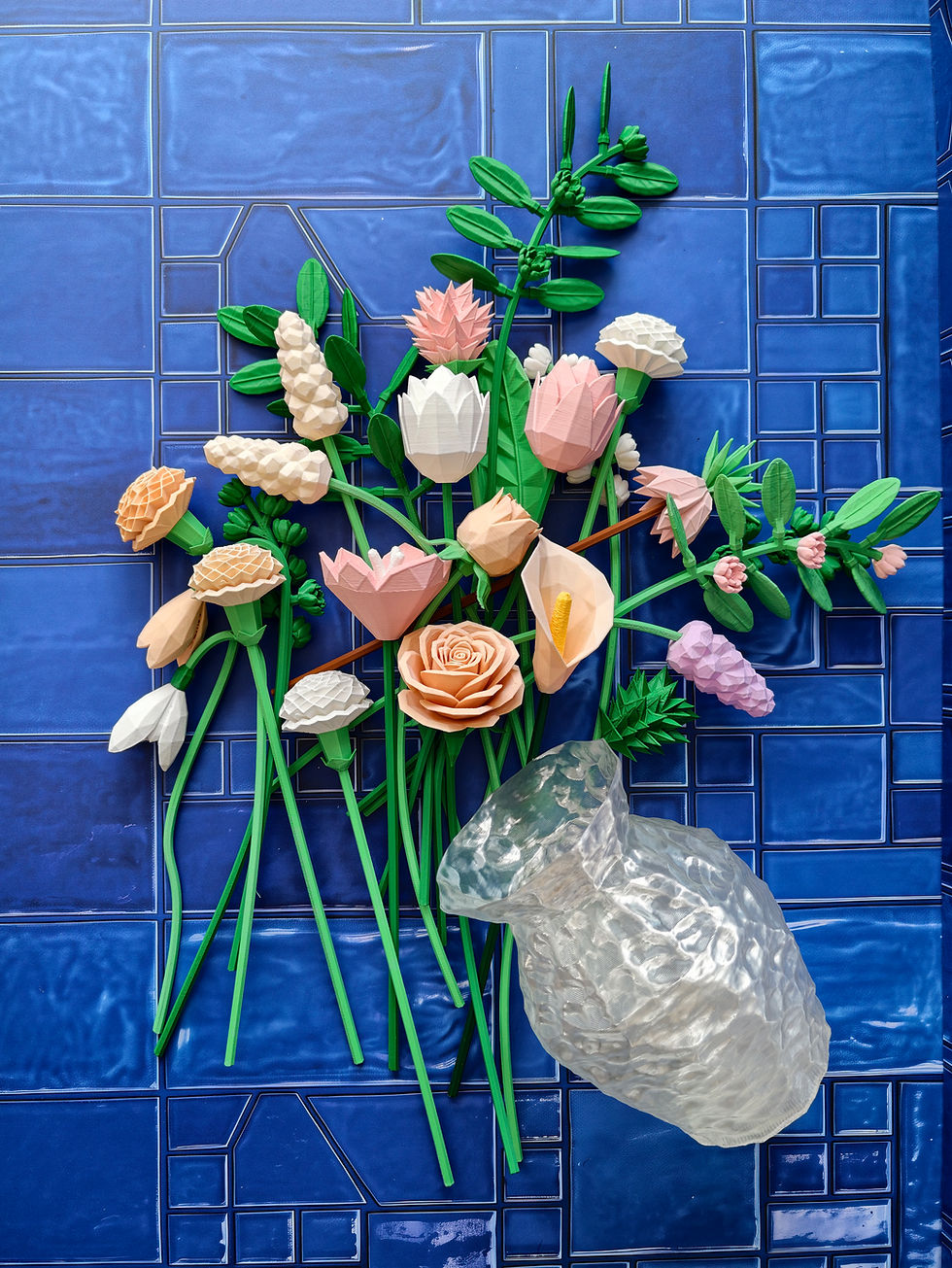
When 3D prints become collectible objects, the question of "who produced them and for what purpose" comes into play, in addition to the technology itself. At this point, Formasupra is not just an ordinary 3D printing workshop, but a digital craft studio.
The main reasons why Formasupra designs are not merely industrial products but also possess collectible value are as follows:
The Transformation of Artist Practice into Craftsmanship: Produced with the vision of a duo from art and design disciplines, Ahmet Rüstem Ekici and Hakan Sorar, these objects possess a strong conceptual foundation. An artistic idea that begins in a digital environment transforms into a physical work of craftsmanship through the nozzles of 3D printers.
Curatorial Approach and Limited Production: Each series produced at Formasupra is a digital interpretation of a specific theme (e.g., an archaeological form or an architectural detail). The masterful craftsmanship of traditional art is replaced here by the skillful management of "prompts," "modeling," and "machine parameters."
Material and Form Awareness: Produced with bioplastics and next-generation materials that reflect the spirit of the times, these forms establish a different relationship with nature and production ethics, unlike mass-produced plastic.
New Question Areas
If a 2015 model 3D printer is no longer working, and replicating its layer traces perfectly is difficult even with current technology, wouldn't that object become unique? Does the fact that a digital file (STL or OBJ) can be copied infinitely eliminate the physical "uniqueness" of that file in 2024, which is achieved by melting a specific material at a specific temperature?
Today, when you hold a Formasupra object in your hand, you're not just holding an aesthetic design; you're holding a "digital craft" piece, coded by artists of the digital age and frozen in the machine language of its time. And just like the first ceramics or bakelite objects of the past, these objects will carry the technological and conceptual fingerprint of their era into the future. Could 3D Prints Be the Collectible Objects of the Future? Only time will tell.


Comments